The Daily Quest for Clean Water
Lifelines in the Dust: The Critical Reality of Water Access in Vulnerable Communities
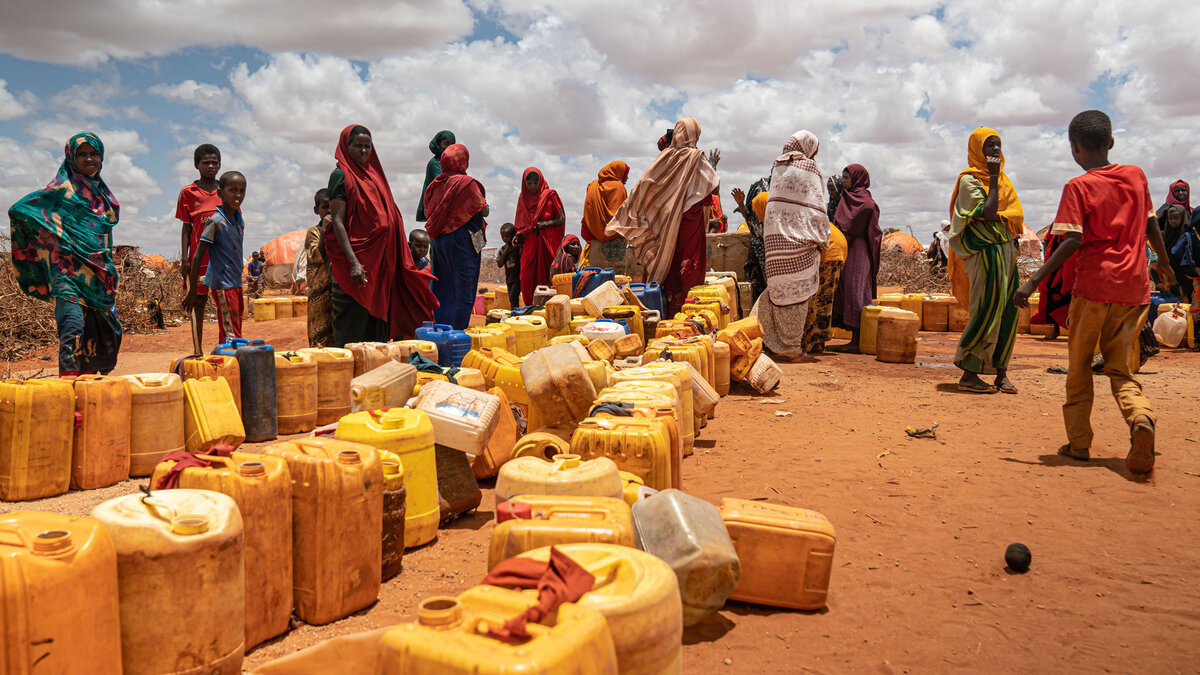
Visual Analysis & Context The image captures a powerful scene that is a daily reality for millions in drought-affected regions. Under the expanse of a bright, cloud-dotted sky, a community has gathered at a water point. The foreground is dominated by a "sea of yellow"—hundreds of plastic jerrycans lined up in distinct rows, marking the place of families waiting for their turn to fill them. The red, dusty earth and sparse vegetation signal an environment where water is not just a resource, but a precious commodity that dictates the rhythm of daily life.
The Human Impact Predominantly, it is women and children who populate this scene. Clothed in vibrant, colorful fabrics that contrast sharply with the dry terrain, they stand or sit near their containers. This visual underscores a critical humanitarian statistic: the burden of water collection falls disproportionately on women and girls. The time spent queuing—often hours under the hot sun—is time lost from education, livelihood activities, and rest. The sheer number of containers suggests that water availability is intermittent or limited, requiring families to stockpile as much as they can carry whenever the source is flowing.
The Call for Resilience While the image shows scarcity, it also shows order and community resilience. The neatly arranged rows of jerrycans indicate a system of cooperation and patience amidst crisis. However, this "jerrycan culture" is a symptom of a deeper infrastructural gap.
For organizations like Raad Society, scenes like this define the mission. They emphasize why Strategic Objective 1—"Improve access to safe and sustainable water" —is not just about pipes and boreholes, but about dignity. Providing reliable water sources close to home frees up time for school, improves hygiene, and protects the health of the most vulnerable. This image serves as a stark reminder that while the community is resilient, sustainable support is vital to transforming this daily struggle into a future of water security.